Longfellow gift volume
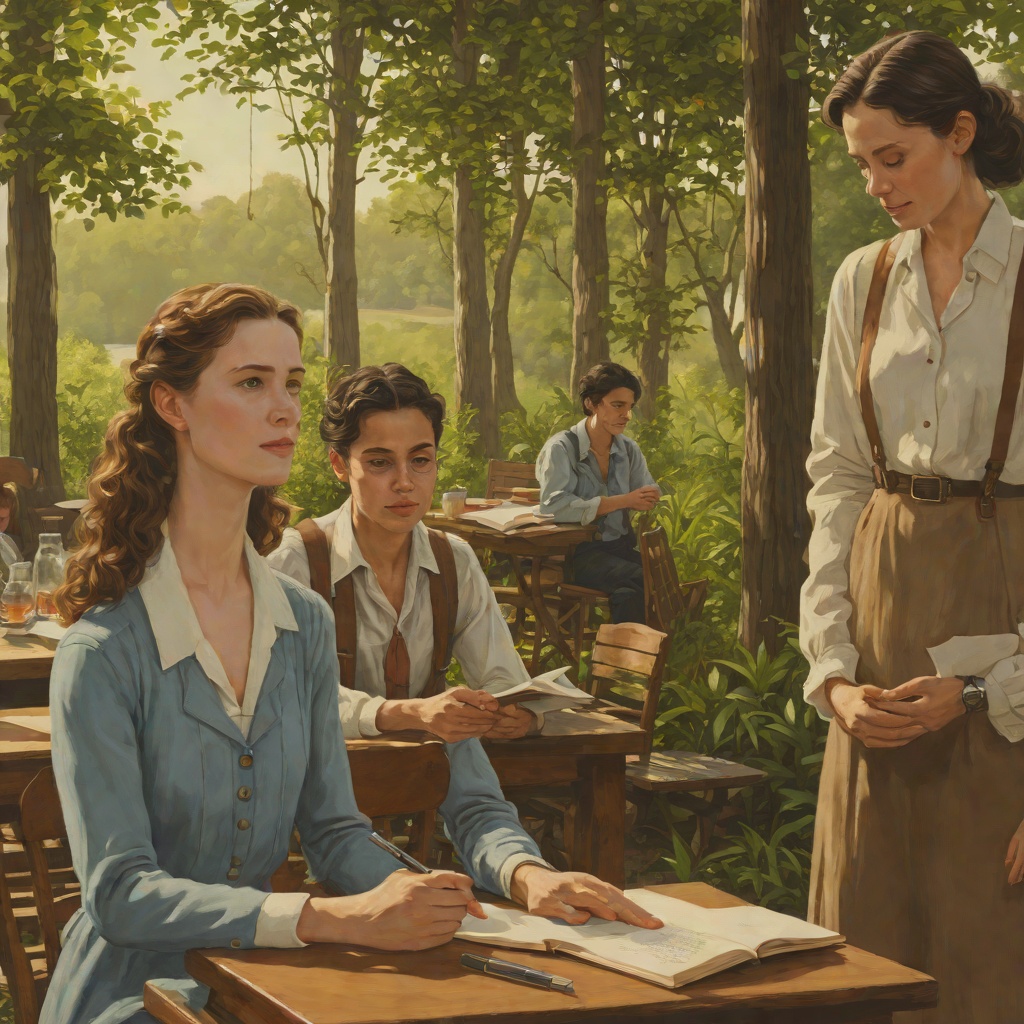
The Captain and Ann BarbaraThe Longfellow gift volume was the first book Mary Antin ever owned. It was a thin volume of selections from the poems of Henry Wadsworth Longfellow, given to her by Miss Dillingham, her teacher, one evening just before Miss Dillingham locked up her desk. To Mary, who had never before possessed a book, this slim collection was a bottomless treasure. The mere sense of possession was a source of bliss, and the fact that she already knew and loved the poems inside made the gift doubly precious. Miss Dillingham, who was Mary's first American friend and who had first put Mary's name in print, was thus also the one who started Mary's library. Mary later expressed deep regret that Miss Dillingham was gone before Mary had given much of an account of all her gifts of love and service.
The Gift and Its Giver
The presentation of the volume came at a moment of intense literary awakening for Mary. She had recently discovered the secret of poetic meter—that lines must match not merely in syllable count but in accent—and this revelation had unlocked a flood of springtime poetry, which she herself later dismissed as the veriest rubbish a child ever perpetrated. Her half-hours with Miss Dillingham were full of delight, quite apart from her new-born ambition to become a writer. Miss Dillingham had already played a pivotal role in Mary's American education, and the gift of the Longfellow volume was the culmination of that relationship. It was Miss Dillingham who had first put Mary's name in print, and now she extended that literary patronage by placing a book of poetry into Mary's hands. The gift was not merely a token of affection but an act of initiation into the world of letters.
The First Book and the Birth of a Library
For a child who had never owned a book, the Longfellow gift volume was more than a collection of poems; it was the foundation stone of a personal library. The sense of possession alone was a source of bliss, a feeling that transformed the thin volume into a bottomless treasure. Mary already knew and loved the poems, so the book was not an introduction to unfamiliar verse but a confirmation of tastes already formed. This act of giving established a pattern in Mary's life: somebody did something for her all the time. The gift also carried a symbolic weight, marking the transition from a girl who read borrowed or school-provided texts to one who owned literature. It was a private, portable badge of her growing identity as a student and a lover of poetry.
The Gift in the Context of Mary's Rise
Around the middle of the year, Mary was promoted to the grammar school, and it was then that she walked on air, telling herself she was a student now, in earnest, not merely a school-girl learning to spell and cipher. She was going to learn out-of-the-way things, things that had nothing to do with ordinary life—things to know. When she walked home afternoons with the great big geography book under her arm, it seemed to her that the earth was conscious of her step. Sometimes she carried home half the books in her desk, not because she should need them, but because she loved to hold them, and also because she loved to be seen carrying books. It was a badge of scholarship, and she was proud of it. The Longfellow gift volume belonged to this same constellation of proud possessions, a private treasure that complemented the public display of carrying books. It connected her to the memory of her cousin Hirshel in Vitebsk, whose student's uniform and worn copybooks she had once watched with envious eyes; now she was herself as he, aye, greater than he, for she knew English and she could write poetry. The gift volume was part of that sense of surpassing achievement, a tangible proof of her entry into the world of English letters.
Significance and Legacy
The Longfellow gift volume stands as a quiet but decisive object in Mary Antin's account of her Americanization. It was the first book she owned, the seed of a library, and a gift from the teacher who was her first American friend. The volume embodied the convergence of personal affection and literary ambition, and it marked the moment when Mary's love of reading poetry became inseparable from her aspiration to write it. The regret Mary later expressed—that Miss Dillingham was gone before she had given much of an account of all her gifts—underscores the depth of the debt she felt. The thin volume of Longfellow's selections was thus not merely a book but a threshold object, one that helped carry Mary from the status of a school-girl learning to spell and cipher to that of a student in earnest, a writer in the making, and a proud owner of a library that began with a single, bottomless treasure.